

The Beacon: Childhood vaccine rates could get worse as demand for shots dips in Kansas City
By Suzanne King
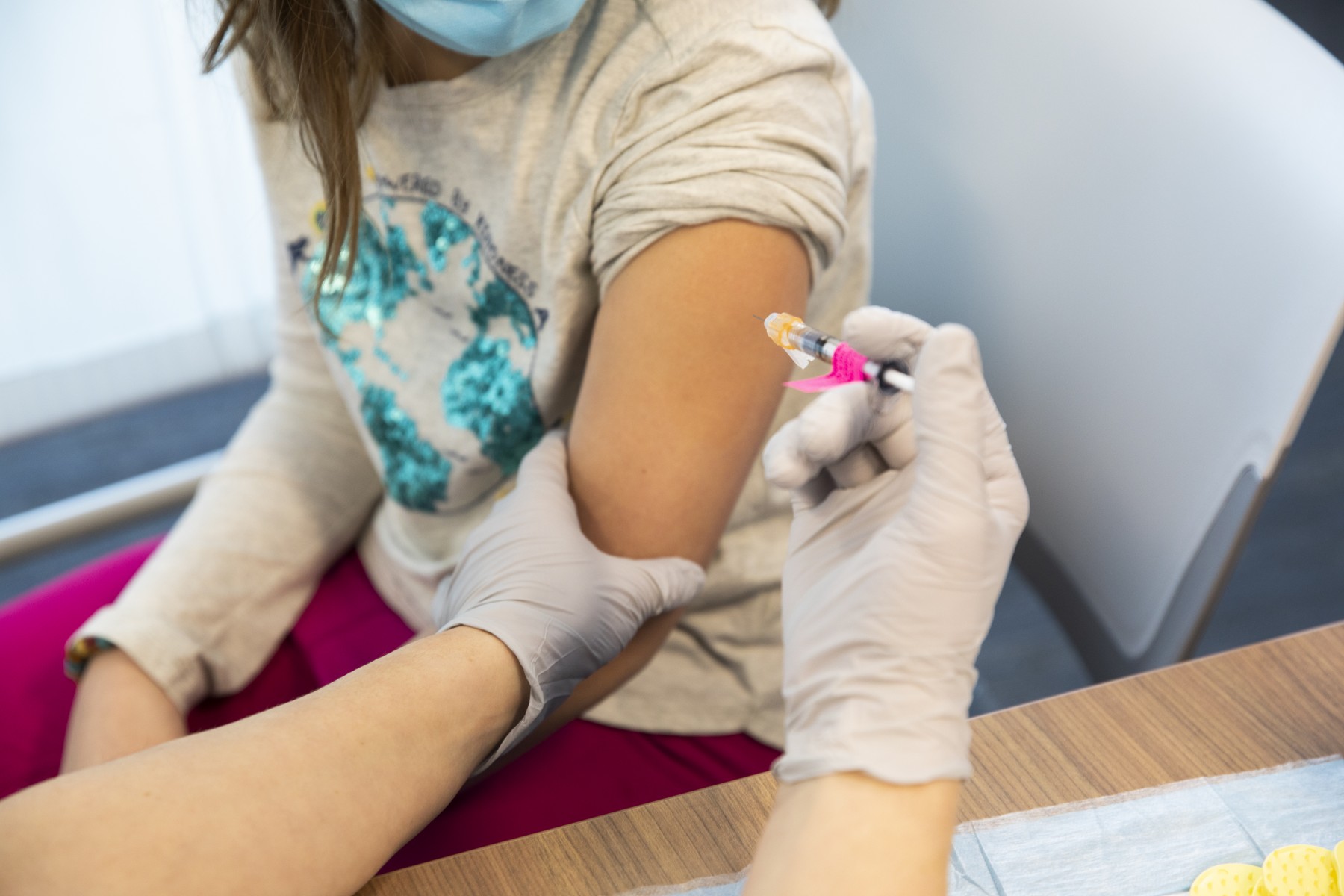
Two of the Kansas City area’s largest public health departments are seeing a significant drop in demand for vaccinations.
The Kansas City Health Department said vaccine traffic has fallen as much as 30% from a year ago, while the Johnson County Department of Health and Environment reports a 20% decline.
The numbers are consistent with recent trends in vaccination rates, which have been especially evident among children.
Nearly 6% of Missouri kindergartners received a religious exemption for the 2025-26 school year, allowing them to avoid childhood vaccinations required to attend. And in Kansas, the religious exemption rate was 3.3% in the 2024-25 school year, the most recent data available.
Currently, the United States is experiencing the largest measles outbreak it has seen in decades. According to the Centers for Disease Control and Prevention, so far this year 2,550 measles cases have been reported by 47 jurisdictions, and there have been 38 new outbreaks.
That follows 2025, when 2,289 cases were confirmed, along with 48 outbreaks, including one in southwest Kansas, which came dangerously close to the Kansas City area.
The highly contagious virus will quickly infect anyone who is not vaccinated, and can spread like wildfire when vaccination rates in a community are low. Herd immunity for the virus — when it is unlikely to spread — requires a vaccination rate of 95%, a target that local jurisdictions and schools are increasingly missing.
Measles, which had been virtually eliminated in the United States until immunization rates began to slide in recent years, is not only highly infectious, it’s also dangerous. One child out of 1,000 who gets it will die, said Dr. Maria Deza Leon, an infectious diseases doctor at Children’s Mercy.
“There’s a misconception that measles is only a rash,” she said. “However, measles can have a lot of complications.”
In addition to death, the virus can lead to pneumonia and encephalitis, she said. It can essentially erase a person’s immune memory, leaving them vulnerable to illnesses their body had known how to fight off. And, in rare cases, the virus can remain dormant in the body and show up as a fatal disease years after an infection.
Read the full article via The Beacon
Childhood vaccine schedule explained: Changes, safety and guidance